ASTROBOTIC/PITHARDWAREJun 17, 2026
Griffin-1: the largest commercial cargo bound for the Moon
The American company Astrobotic unveiled Griffin-1, the lunar lander that will try to touch down near the Moon's south pole later this year. On board: ten experiments from six nations, the largest commercial payload ever sent toward the lunar surface. The star is FLIP, Astrolab's half-ton rover. Griffin-1 will carry the supplies for the future lunar base of NASA, the United States space agency, on a mission named Moon Base II. The vehicle now heads to California for environmental testing, before launching on a SpaceX Falcon Heavy rocket.
SPACEX/NASDAQMILESTONEJun 12, 2026
SpaceX goes public: the biggest stock debut in history
SpaceX shares made their debut on the Nasdaq under the ticker SPCX. The initial public offering, the first sale of shares to the public, raised about 75 billion dollars: the largest in history, more than double the previous record held by Saudi Aramco. Elon Musk's company is now valued at about 1.75 trillion dollars. For the Moon this matters enormously: that capital will fuel Starship, the giant rocket that must carry Artemis astronauts to the lunar surface and that still has to pass the test of refueling in orbit.
ESA/BERLINVISIONJun 11, 2026
Europe negotiates with NASA to walk on the Moon
From the Berlin air show, European Space Agency Director General Josef Aschbacher revealed that Luca Parmitano's assignment to Artemis III is only the first step in a broader negotiation with NASA. The stated goal: putting a European astronaut on the lunar surface. On the table Europe offers Argonaut, a lander able to deliver a ton and a half of cargo, and Moonlight, a network of satellites for communications and navigation around the Moon. After the halt of the orbiting Gateway station, Europe is looking for a new path. Aschbacher hopes for more clarity by the end of the year.
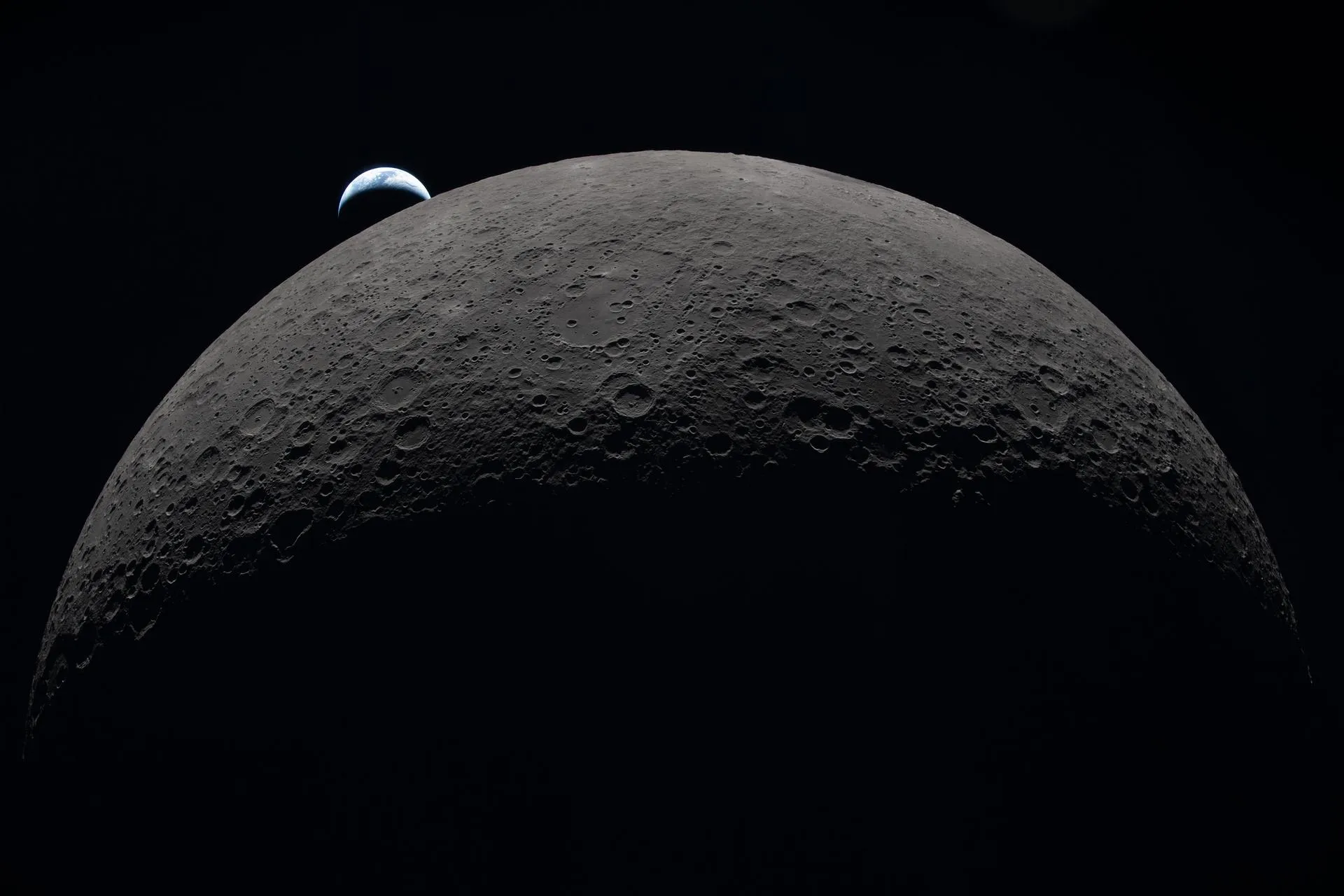
Imagery · Orion-CAM 03
DESTINATION — the lunar south pole
Artemis IV · landing zone · ice-rich PSR
ESA/HOUCREWJun 9, 2026
Artemis III crew revealed, with Italy's Parmitano
From the Johnson Space Center in Houston, NASA introduced the four astronauts of Artemis III: Randy Bresnik in command, mission specialists Frank Rubio and Andre Douglas, and as pilot the Italian Luca Parmitano of the European Space Agency, the first European ever assigned to an Artemis mission. A colonel and test pilot, he already has 366 days in space and a Space Station command behind him. 'This is truly a dream mission,' he said, visibly moved. The flight, expected in 2027, will rehearse in Earth orbit the docking of the Orion capsule with the landers from SpaceX and Blue Origin.
NASA/KSCHARDWAREJun 9, 2026
Artemis III's rocket starts coming together
All the solid rocket booster segments have arrived at the Kennedy Space Center in Florida. This summer two assemblies will proceed in parallel: stacking will begin on the giant SLS, the Space Launch System that will push the spacecraft to orbit, and the two modules of the Orion capsule will be joined, the crew module and the European service module built by the European Space Agency. Piece by piece, the vehicle that will fly in 2027 is becoming real.
AXIOM/HOUSUITSJun 8, 2026
Prada dresses the astronauts heading to the Moon
On June 7, 2026, Axiom Space and Prada unveiled the inner garment that will protect Artemis astronauts. A network of thin tubes runs along the main muscles: cold water flows through them, carrying away body heat for up to eight hours of moonwalking. A second loop delivers oxygen to the face and captures the exhaled carbon dioxide. The Italian fashion house designed the engineered knit fabric and the high-performance fibers. It will be worn under the outer AxEMU spacesuit during Artemis IV, the program's first lunar landing, planned for 2028.
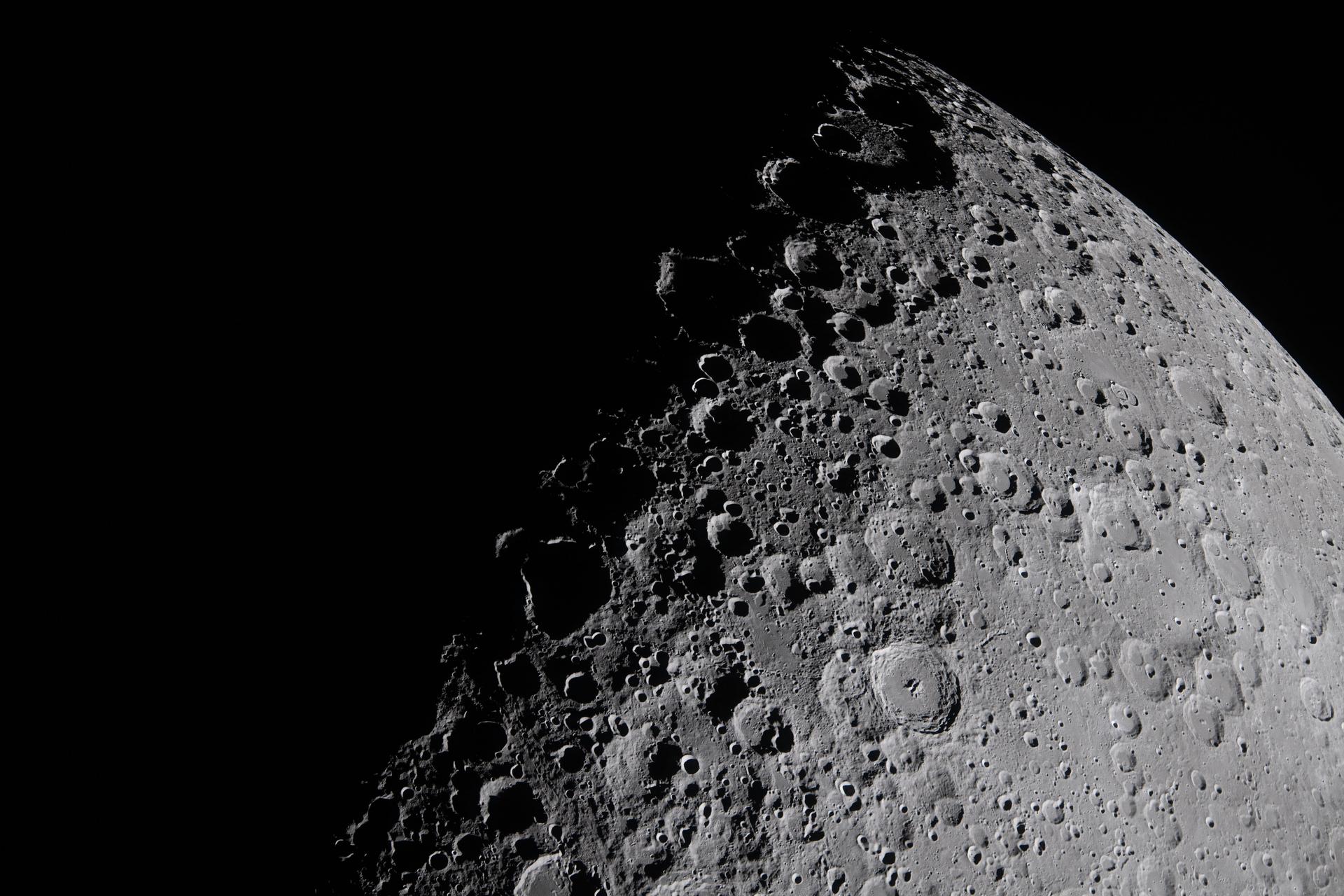
Imagery · Orion-CAM 03
SOUTH POLE — candidate terrain for the first landing
13 regions · peaks of eternal light · frozen water
Receiving new transmissions…